


The Nicoline Festivities
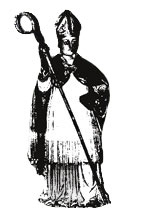 The origins of the Festas Nicolinas, or the St. Nicholas Festivities, date back to the time of religious devotion to St. Nicholas, the Bishop of Mira in Asia Minor (present day Turkey) who lived in the 3rd and 4th centuries.
 Devotion to the saint was brought to Guimarães by pilgrims from all over Portugal and Europe who came here to pay homage to Our Lady of Guimarães – Patron Saint of Portugal up to the 17th century – on their way to or from the famous pilgrimage destination, Santiago de Compostella. According to popular devotion, St. Nicholas is the Patron Saint of poor young women, of the persecuted, of merchants, children, prisoners, the unhappy, and the unlucky; his name is invoked to fight against heresies or to help cure certain diseases. Besides these beliefs, St. Nicholas is considered the Patron Saint of students. Legend has it that three young school children were horribly murdered by an innkeeper but when St. Nicholas approached their bodies, he restored them to life. This may be the reason that he is often depicted with three children at his feet. |
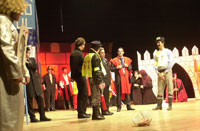 At first, the celebrations in honour of St. Nicholas were only religious in nature, but as time passed, secular elements were included, such as singing and dancing, since these activities gave the people a respite from their harsh daily lives and routines.
 The celebrations of public adoration of the saint, originally begun by the people, were taken over by the students, who built a chapel in honour of St. Nicholas from 1661-1663 inside the Church Nossa Senhora da Oliveira, where they established their Brotherhood. |
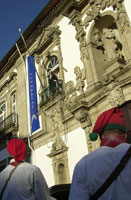
Initially, the festivities took place only on the saint’s feast day, the 6th of December. In the morning on that day, students would attend high mass and in the afternoon participate in games and other popular events.
|
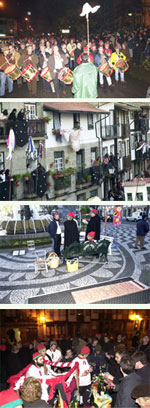 Later, the number of days for the Guimarães Student Festivities would be extended even further: nowadays the St. Nicholas Festivities take place from the 29th of November to the 7th of December.
During this time, the students participate in various activities that give the week a unique structure. Each day brings a particular event, known as a Número Nicolino, or literally a “Nicoline Number.” They are:
As Novenas (The Novenas) O Pinheiro (Planting the Pine Tree) As Ceias Nicolinas (the St. Nicholas Suppers) As Posses (The Offerings) O Magusto (The Chestnut Fire) As Roubalheiras (Little Robberies) O Pregão (Reciting Poetry in the Streets) As Maçãzinhas (The Little Apple Love Offerings) As Danças de S. Nicolau (St. Nicholas Dances) O Baile Nicolino (the Nicoline Ball) |